
Lingering hot or cold sensitivity
Discomfort that continues after the trigger is gone may need investigation.
Specialist endodontic care
Tooth pain can feel urgent, confusing and difficult to locate. A careful endodontic assessment helps identify the responsible tooth, explain whether it can be preserved and determine what should happen next.

When to seek an assessment
Decay, cracks, infection, gum problems and bite pressure can create similar symptoms. Pain can also travel, making the wrong tooth feel responsible.
The first job is not to begin a root canal. It is to prove which tooth needs help—and why.
Discomfort that continues after the trigger is gone may need investigation.
Pressure-related pain may be linked to several tooth, root or bite concerns.
Swelling should be assessed promptly, particularly when accompanied by fever or illness.
The tissue inside a damaged tooth can be affected before severe pain appears.
Diagnosis before treatment
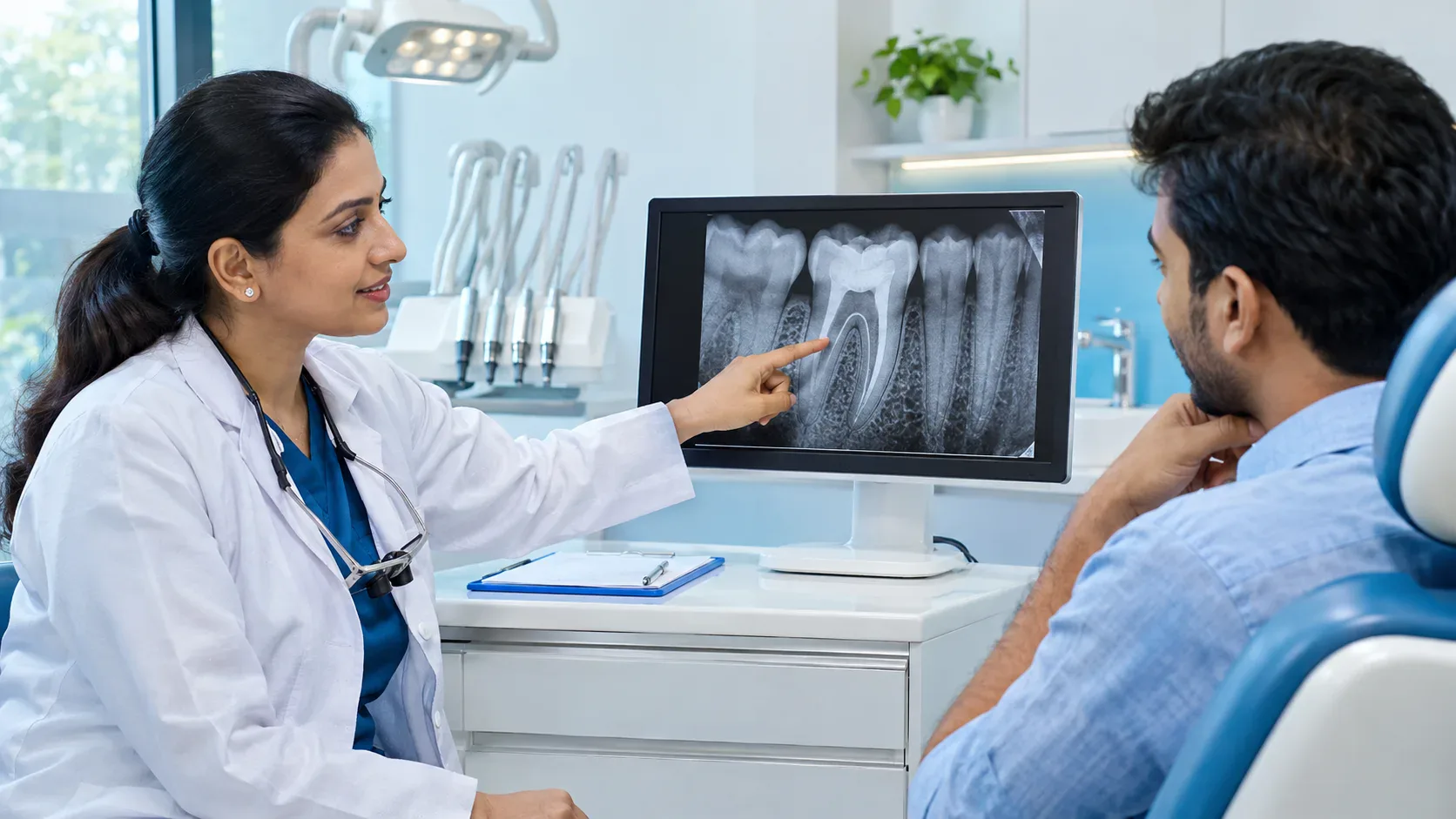
The endodontist combines your symptom history with clinical tests and suitable imaging. The aim is to identify the tooth, understand the condition of the inner tissue and assess whether preserving it is realistic.
If root canal care is appropriate, the infected or inflamed tissue is treated and the internal space is cleaned, shaped and sealed.
The procedure is one part of the plan. Protecting the tooth afterwards matters too.
What may be involved?
Diagnosis, internal treatment and the final restoration work together to preserve the tooth.
Identify
Clinical tests and suitable imaging help determine which tooth is responsible and whether root canal treatment is appropriate.
Treat
The inner space is treated, cleaned, shaped and sealed using a plan suited to the tooth.
Protect
A crown or another restoration may be needed to protect the remaining tooth structure from future fracture.
Comfort and technology
Laser-assisted techniques may support selected endodontic procedures when the specialist considers them clinically appropriate. They do not replace careful diagnosis or every conventional treatment step.
Concerns about pain or anxiety can be discussed before treatment. Anaesthesia and suitable comfort measures are planned around the procedure and the individual patient.
A technology claim should never be more important than the diagnosis behind it.
Confirm the responsible tooth and source of symptoms.
Understand whether the tooth can be preserved and how.
Manage the inflamed or infected internal tissue.
Restore the tooth and review healing afterwards.
What happens next
Share when the pain began, what triggers it and how long it lasts.
The tooth, bite and surrounding tissues are tested and assessed.
Clinical findings and suitable imaging are used to explain the diagnosis.
Proceed with the agreed endodontic plan and comfort measures.
Protect the remaining tooth and monitor the response to treatment.
Why 20 to 32 Smiles?
Questions about root canal care
No. Pain may come from decay, cracks, gums, bite problems or other causes. Diagnosis comes first.
The aim is to manage the source of pain. Anaesthesia and appropriate comfort measures are used, although individual experiences vary.
Laser technology may be used as an adjunct in selected cases. It does not replace diagnosis, specialist judgment or all conventional steps.
Some teeth need a crown or another restoration depending on location, remaining structure and bite forces.
Root canal treatment in Mylapore
Start with a specialist assessment and a clear explanation of whether root canal treatment—or another approach—is appropriate.