
One or more missing teeth
Implants and bridges may both replace a gap, but they rely on different forms of support.
Specialist restorative dentistry
Replacing a tooth is not simply filling a gap. Your gums, bone, bite, neighbouring teeth and expectations all influence the right restoration. We help you understand the complete decision before treatment begins.

What needs restoring?
A tooth may be missing, fractured, heavily filled or weakened after previous treatment. Each situation places different demands on the restoration.
The best-looking option is only successful when it also respects the bone, gums, bite and teeth around it.
Implants and bridges may both replace a gap, but they rely on different forms of support.
A crown may protect remaining tooth structure when a filling alone is no longer enough.
Timing, healing and replacement options should be considered before removal whenever possible.
Wear, fracture, decay or gum changes may require repair, replacement or a different plan.
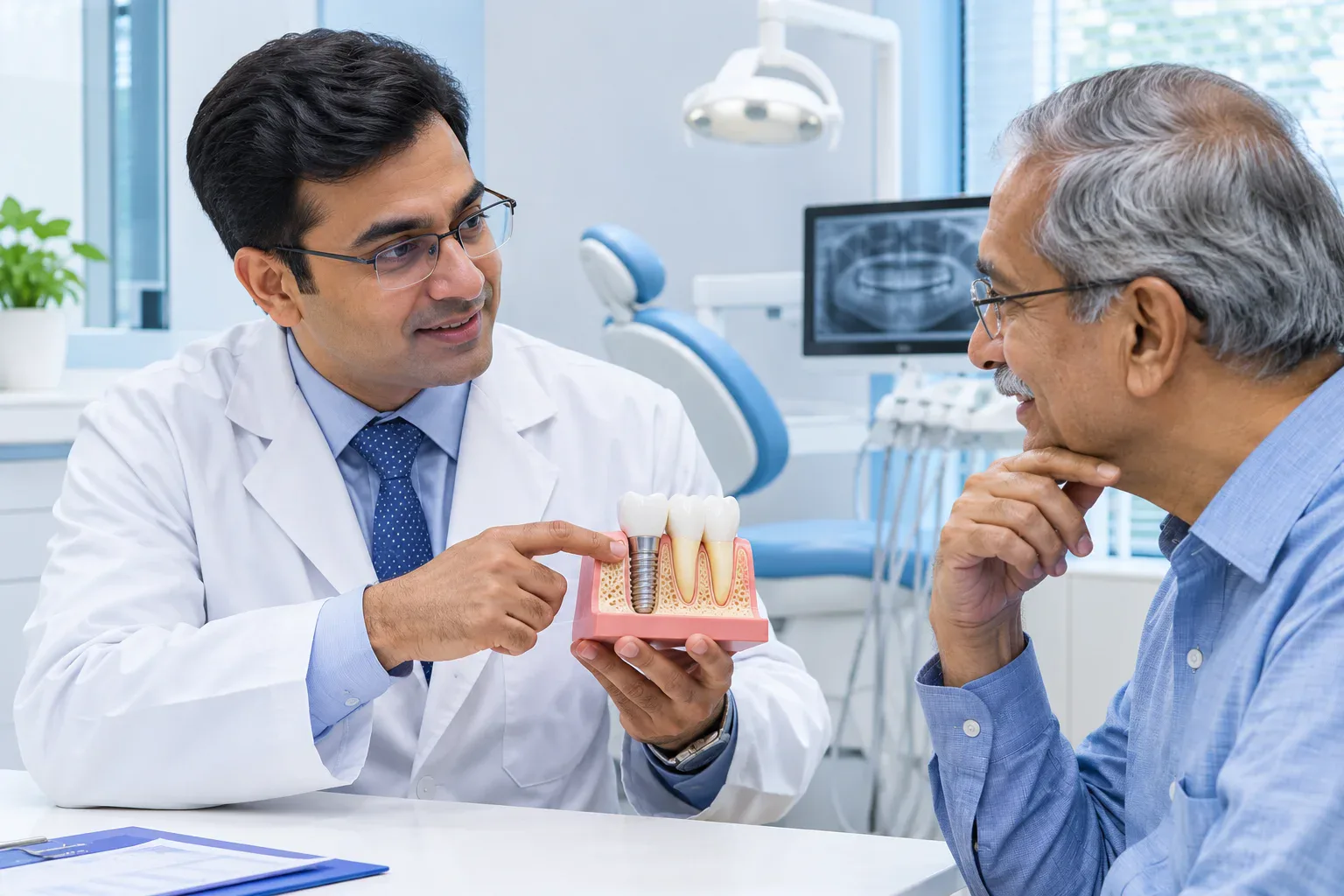
See the complete restoration
The implant sits within the bone and supports a crown, bridge or another planned restoration. Its position affects the final tooth shape, bite, cleaning access and long-term maintenance.
That is why planning looks beyond the empty space. The clinician assesses bone, gums, neighbouring teeth, bite forces and relevant health history before recommending a route.
A good replacement should belong to the whole mouth—not merely occupy the gap.
Implant, crown or bridge?
The right answer depends on what remains, what is missing and what can provide healthy support.
Replace a missing root
An implant provides support within the bone for a planned replacement tooth. Suitability depends on bone, gum health, space, timing and health history.
Protect a weakened tooth
A crown covers a prepared tooth when the remaining structure needs more protection than a filling can provide.
Span a missing tooth
A bridge replaces a gap using selected neighbouring teeth or implants for support.
Questions that shape the plan
A restoration must work beyond the day it is fitted. Cleaning access, bite forces, habits and maintenance all influence how it performs over time.
We discuss not only what can be placed, but what you will need to do to care for it.
Can the bone, gums or neighbouring teeth support this option?
How will the restoration behave when you bite and chew?
What shape and position will look natural in your smile?
How will you clean and protect the result long term?
Your treatment journey
Examine the tooth or gap, gums, bite, symptoms and relevant health history.
Suitable imaging helps evaluate roots, bone and surrounding structures.
Discuss benefits, limitations, stages, healing and maintenance—not only the procedure.
Treatment proceeds in coordinated stages, with temporary solutions when appropriate.
Daily care and professional reviews help maintain the restoration and supporting tissues.
Why 20 to 32 Smiles?
Questions before treatment
No. Bone, gum health, neighbouring teeth, medical history, timing and personal priorities all influence suitability.
Assessment, placement, healing and restoration may happen in stages. The sequence varies according to the site and individual healing needs.
Not always. The remaining tooth structure, root, gums and supporting bone must first be assessed.
Longevity varies with material, bite forces, oral hygiene, habits and the health of supporting teeth, bone and gums.
Dental implants in Mylapore
Meet the restorative team and compare the options that are realistic for your mouth, priorities and long-term care.