
Crowded or overlapping teeth
When teeth compete for space, cleaning can feel harder and your smile may appear uneven.
Specialist-led orthodontic care
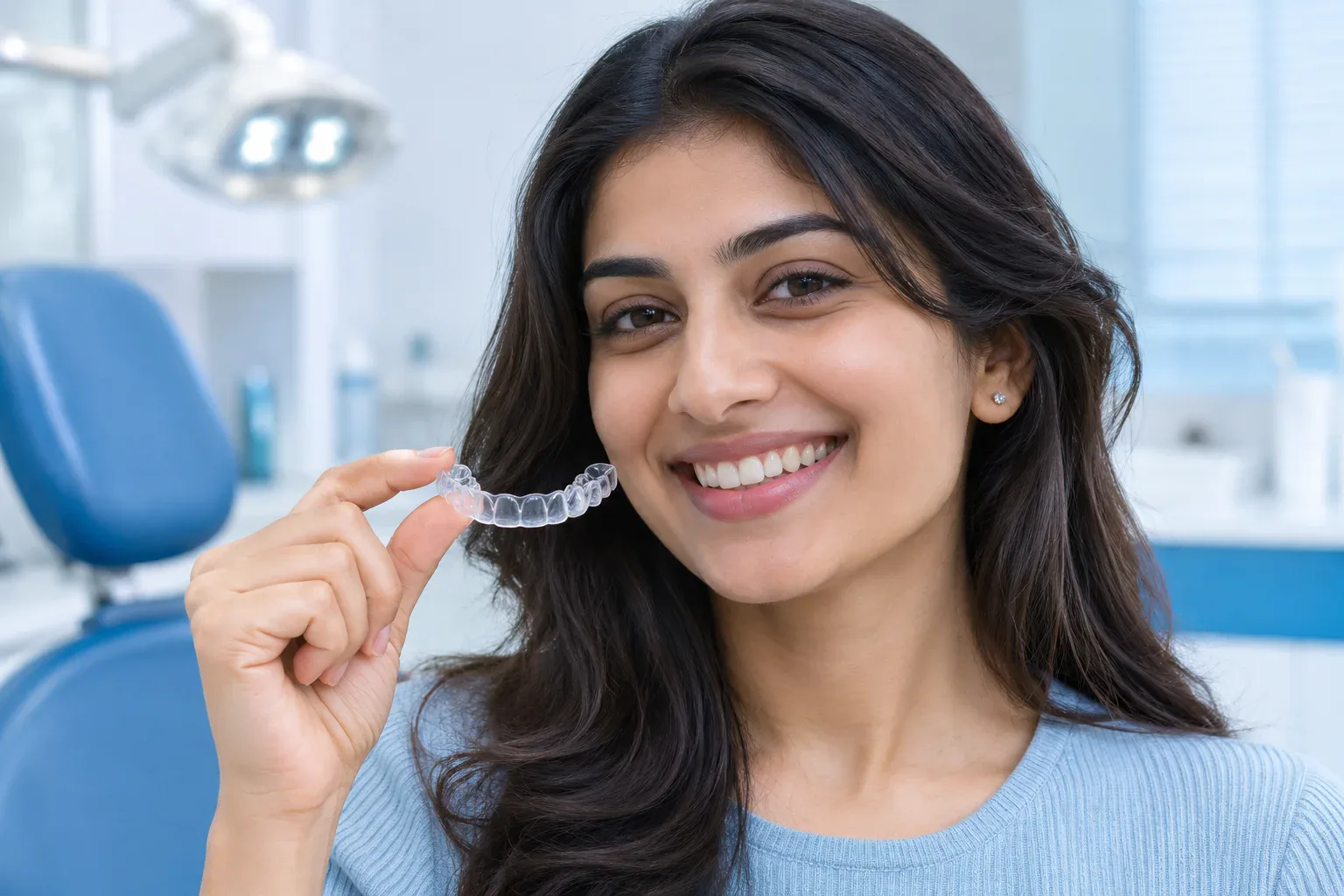
Transparent, removable aligners can straighten your teeth with less interruption to how you eat, speak and show up every day. At 20 to 32 Smiles, treatment begins with an orthodontic assessment—not a tray recommendation.

What would you like to change?
Perhaps you avoid showing your teeth in photographs. Maybe an old gap has become more noticeable, your teeth have shifted after braces, or cleaning crowded areas has become difficult.
The right starting point is not choosing an aligner brand. It is understanding what needs to move—and how that movement could affect your bite.
When teeth compete for space, cleaning can feel harder and your smile may appear uneven.
Spacing can affect how your smile looks and may need to be considered alongside your bite.
Previous results can change when retainers are not worn or teeth naturally move over time.
Some overbite, crossbite and open-bite concerns may be suitable for aligners after assessment.
Our approach
Moving teeth is a clinical process, even when the appliance looks simple.
Before recommending clear aligners, the orthodontist evaluates your teeth, gums, jaw relationship and bite. This helps determine whether aligners can deliver a predictable result—or whether braces or another approach would offer better control.
Because the goal is not merely straighter-looking teeth. It is a smile that looks good, feels comfortable and functions properly.
Aligners or braces?
We explain the trade-offs clearly, so you can choose based on your teeth—not advertising.
RemovableClear aligners
Transparent trays can be removed for meals, brushing and important occasions.
 Fixed
Metal braces
Fixed brackets and wires work around the clock and can manage a wide range of movements.
Living with aligners
Clear aligners are removable, but successful treatment requires consistency. You will generally need to wear them for most of the day and remove them for meals, brushing and cleaning.
You may notice slight pressure when changing to a new set of trays. Regular reviews allow the orthodontist to monitor progress and adjust the plan when necessary.
Discreet does not mean effortless. For the right patient, it can mean orthodontic treatment that fits more naturally into everyday life.
Consistency matters more than convenience.
Take trays out for meals and oral care.
Progress needs professional monitoring.
Protect the result after active movement.
What to expect
Tell us what you would like to change and what matters most during treatment.
The orthodontist examines your alignment, bite, gums and supporting teeth.
Understand whether aligners, braces or another approach is more appropriate—and why.
If aligners suit you, treatment is mapped as a sequence of controlled tooth movements.
Progress is reviewed throughout treatment, followed by retention to help protect the result.
Why 20 to 32 Smiles?
Questions worth asking
Clear explanations matter before any teeth begin to move.
The terms are often used interchangeably, although aligners are not completely invisible. They are transparent, removable trays designed to move teeth gradually.
No. Aligners can treat many concerns, but some tooth movements and bite problems may respond better to fixed braces or a combined approach.
Treatment time depends on complexity, biological response and how consistently you wear the trays. A meaningful estimate follows assessment and planning.
Some people notice a temporary change when they first begin wearing aligners. This generally improves as the tongue adjusts to the trays.
Yes, but aligners only work when worn consistently. Repeatedly leaving them out can slow progress.
Usually, yes. Teeth can gradually shift after orthodontic treatment, and retainers help maintain their new positions.
Clear aligners in Mylapore
Meet the orthodontic team at 20 to 32 Smiles and find out whether clear aligners are the right way to achieve the change you want.