
Tooth pain or a suspected cavity
Discomfort, food getting stuck or visible changes deserve an age-appropriate assessment.
Dental care for growing smiles
Children do better when they understand what is happening and feel included—not rushed. At 20 to 32 Smiles, every visit is shaped around your child’s age, development, comfort and oral-health needs.

What brings parents in?
A dark spot, a new tooth arriving strangely, a fall at school, resistance to brushing—or simply wondering when the first dental visit should happen.
You do not need to diagnose the problem before coming in. You only need to tell us what you have noticed.
Discomfort, food getting stuck or visible changes deserve an age-appropriate assessment.
A gentle introduction can help the clinic feel familiar before treatment is ever needed.
Eruption, spacing, jaw growth and oral habits can be monitored as your child grows.
Dental injuries should be assessed promptly—even when the child appears comfortable.
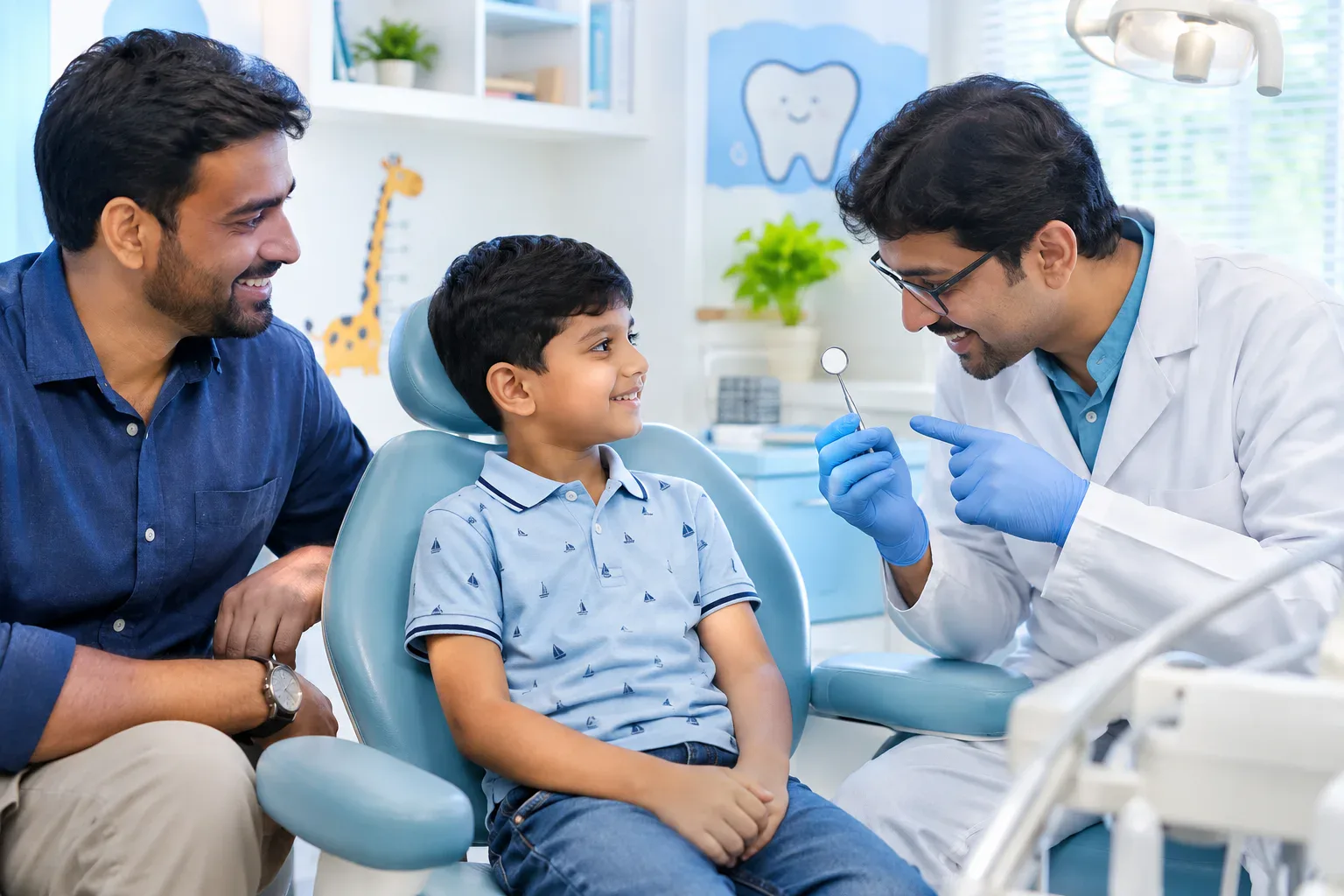
A visit children can understand
The dentist may first talk, show the mirror or introduce the equipment in simple language. Parents remain part of the conversation, and the pace is adjusted to the child in front of us.
The aim is not to “get through” the appointment. It is to examine carefully while building enough trust for healthy dental habits to continue.
A positive visit today can change how a child approaches dental care for years.
Preventive-first care
Children’s teeth change quickly. Regular care helps parents act earlier, when guidance or a smaller intervention may be enough.
Protection
Check-ups, cleaning guidance, diet conversations and suitable preventive care can help lower decay risk.
Development
Baby teeth, permanent teeth, jaws and oral habits influence one another as a child grows.
For parents
Parents should leave knowing what was found, what matters now and what can wait. Recommendations are explained in plain language, with priorities based on the child’s age, risk and current oral health.
The goal is not perfect parenting. It is a practical routine your family can repeat.
Share changes, symptoms and habits without guessing the diagnosis.
See what the dentist found and why it matters.
Know what needs attention now and what can be monitored.
Take home routines matched to your child’s stage.
Your child’s visit
Share symptoms, habits, health history and previous dental experiences.
The team introduces the visit at a pace suited to your child’s comfort.
Teeth, gums, bite and development are assessed with age-appropriate communication.
You receive clear guidance on prevention, treatment choices and timing.
Leave with practical steps your family can continue at home.
Why 20 to 32 Smiles?
Questions parents ask
Early visits are useful when the first teeth emerge and allow parents to receive preventive guidance. Timing can be discussed based on your child’s needs.
Tell the team before the visit. The appointment can begin with conversation and a gentle introduction before any recommended care.
Baby teeth support eating, speech, confidence, spacing and permanent-tooth development. The dentist will explain whether monitoring or treatment is appropriate.
The interval depends on age, cavity risk, habits and current oral health. A suitable schedule follows assessment.
Pediatric dentist in Mylapore
Tell us what you have noticed. We will help you understand the right next step for your child.